
For Small Businesses, Customer Experience Often Starts With a WhatsApp Message
Learn how small businesses can create a better customer experience from the first WhatsApp message through fast replies, organised follow-ups and human support.
On this page15 sections
- The First Message Is More Than an Enquiry
- Respond Quickly and Set Expectations
- Ask Only Relevant Questions
- Give Customers Clear Answers
- Avoid Making Customers Repeat Themselves
- Assign Every Conversation
- Make the Next Step Obvious
- Use Automation for Routine Tasks
- Know When a Human Should Take Over
- Follow Up With Context
- Continue the Experience After Purchase
- Respect Customer Preferences
- Measure the Customer Experience
- How Voixt.ai Helps Small Businesses
- Final Thoughts
A customer’s experience with a small business often begins before they visit the store, book an appointment or place an order. It begins with a simple WhatsApp message.
“Is this available?”
“What is the price?”
“Can I book for tomorrow?”
The way a business handles that first message can shape the customer’s entire impression. A quick, helpful and organised response builds confidence. A delayed or confusing reply can send the customer to a competitor.
The First Message Is More Than an Enquiry
The first WhatsApp message may represent:
- A potential sale
- A booking request
- A product question
- A service requirement
- A support issue
- A repeat purchase
- A referral from an existing customer
Businesses should treat each new message as the beginning of a customer journey, not as an isolated chat.
Respond Quickly and Set Expectations
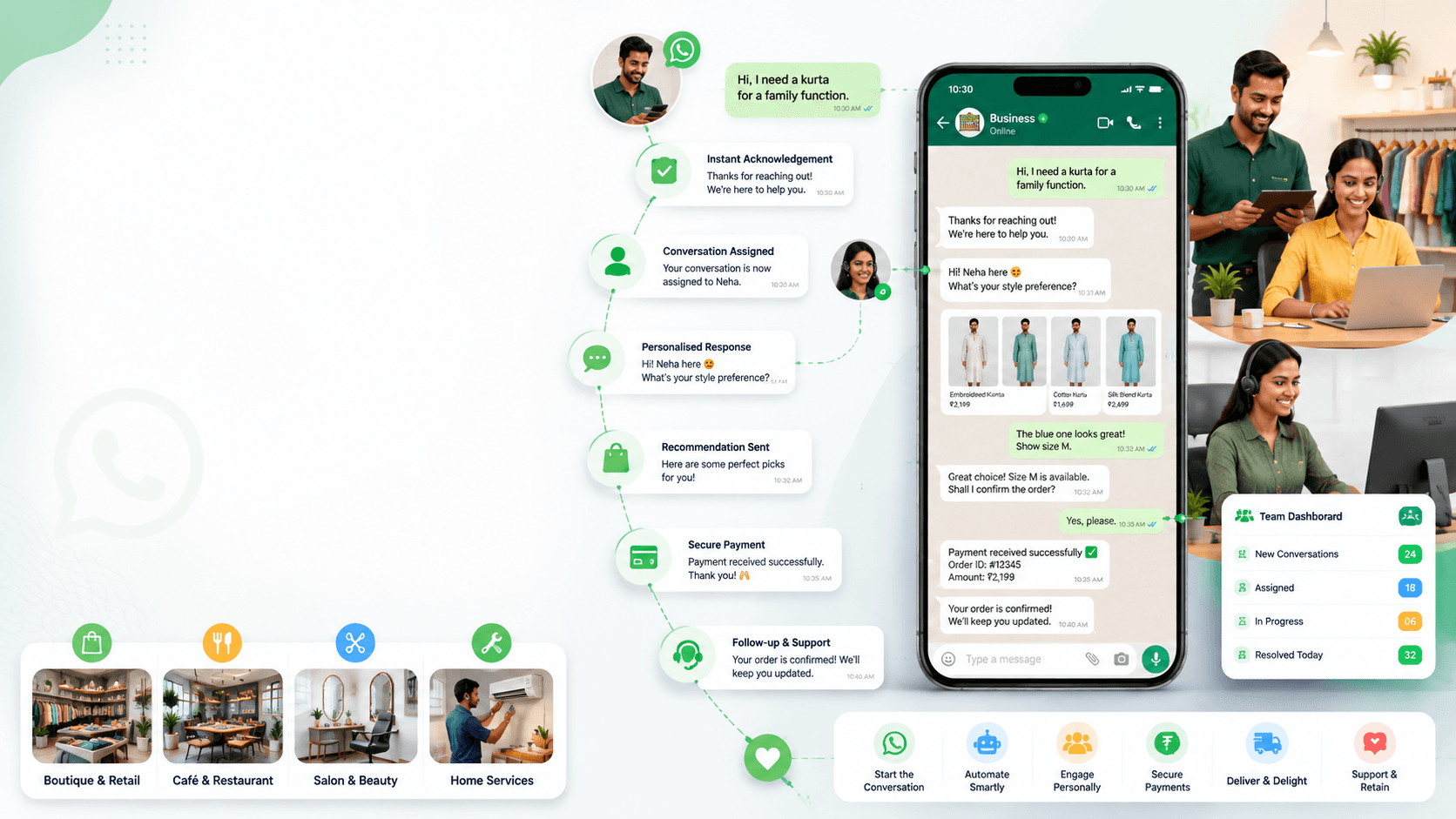
Customers usually send a WhatsApp message because they expect a convenient response. An automatic acknowledgement can confirm that the enquiry has been received.
For example:
“Hi! Thank you for contacting us. We’ve received your message. Please share the product or service you need, and our team will assist you shortly.”
The message should be brief, helpful and honest. It should not pretend that a person has already reviewed the enquiry.
Ask Only Relevant Questions
Customers should not have to complete a long questionnaire before receiving help.
Start with the few details needed to understand their requirement, such as:
- Product or service interest
- Preferred date or time
- Location
- Size or variant
- Budget range
- Urgency
Collect information gradually so the conversation feels natural.
Give Customers Clear Answers
A fast reply is not useful if it is incomplete or inaccurate. Employees should have access to approved information about:
- Prices
- Product availability
- Service packages
- Delivery areas
- Appointment timings
- Payment options
- Exchange or cancellation policies
Quick-reply templates can save time, but employees should personalise them based on the customer’s question.
Avoid Making Customers Repeat Themselves
Customers become frustrated when they explain their needs to one employee and then repeat everything to another.
A shared WhatsApp inbox can preserve:
- Conversation history
- Customer information
- Product or service interest
- Previous purchases
- Assigned employee
- Follow-up details
- Private internal notes
If the conversation is transferred, the next employee can review the context before responding.
Assign Every Conversation
When several employees manage WhatsApp enquiries, every conversation should have one responsible owner.
Assignment can be based on:
- Product or service
- Location
- Language
- Employee availability
- Customer type
- Enquiry source
Clear ownership prevents duplicate replies and reduces the chance that everyone assumes someone else is handling the customer.
Make the Next Step Obvious
Every conversation should move towards a useful next action. Depending on the customer’s requirement, that action may be:
- View products
- Receive a quotation
- Book an appointment
- Schedule a demo
- Confirm an order
- Complete payment
- Speak with a team member
- Set a follow-up date
Customers should not be left wondering what to do next.
Use Automation for Routine Tasks
Small teams can use automation to handle predictable steps such as:
- Acknowledging new messages
- Capturing contact details
- Asking basic questions
- Assigning conversations
- Sharing approved information
- Sending appointment reminders
- Confirming payments
- Providing order updates
- Creating follow-up reminders
Automation should reduce waiting time while keeping human assistance easy to access.
Know When a Human Should Take Over
Some conversations need judgement, empathy or negotiation. A person should handle:
- Complex product recommendations
- Custom service requirements
- High-value purchases
- Payment concerns
- Complaints
- Returns and refunds
- Sensitive customer situations
A smooth AI-to-human handover should preserve the existing conversation so the customer does not need to start again.
Follow Up With Context
Many customers do not purchase during the first conversation. They may need time to compare options, confirm dates or discuss the decision.
A useful follow-up should have a clear date and purpose.
For example:
“Follow up on Friday to confirm whether the customer wants the weekend appointment after reviewing the quotation.”
Relevant follow-ups feel helpful. Repeated messages without context feel like pressure.
Continue the Experience After Purchase
Customer experience does not end when payment is completed. Businesses can continue providing value through:
- Order confirmations
- Appointment reminders
- Delivery updates
- Service-status updates
- Feedback requests
- Support assistance
- Relevant reorder reminders
Clear communication after purchase builds trust and increases the chance of repeat business.
Respect Customer Preferences
A customer who sends an enquiry does not automatically want frequent promotional campaigns.
Businesses should obtain appropriate consent, send relevant messages, provide opt-out options and protect customer information.
A positive customer experience depends on trust as much as convenience.
Measure the Customer Experience
Small-business owners should monitor:
- First-response time
- Unanswered conversations
- Enquiries awaiting assignment
- Follow-ups due or overdue
- Appointments booked
- Orders completed
- Customer feedback
- Repeat purchases
- Common complaints
These insights help identify where customers experience delays or confusion.
How Voixt.ai Helps Small Businesses
Voixt.ai helps small businesses create an organised customer experience from the first WhatsApp message through:
- Shared multi-agent WhatsApp inboxes
- Automatic contact capture
- Conversation assignments
- Contact tags and filters
- Visual CRM pipelines
- Follow-up reminders
- No-code automation workflows
- AI-powered responses
- AI-to-human handovers
- Private internal notes
- Targeted campaign management
- WhatsApp E-Shop
- Orders and payments
- Automated order updates
Teams can respond faster, coordinate internally and continue every customer journey without relying on scattered personal WhatsApp accounts.
Final Thoughts
For many small businesses, the first WhatsApp message is the first real customer touchpoint.
A helpful response, clear ownership, relevant follow-up and easy human support can turn a simple message into a lasting customer relationship.
Voixt.ai helps businesses organise every stage of that journey so customers receive a consistent and professional experience from their first message onwards.