
How D2C Brands Can Turn Instagram Traffic Into WhatsApp Sales
Learn how D2C brands can convert Instagram visitors into WhatsApp leads, simplify product discovery, automate follow-ups and increase direct sales.
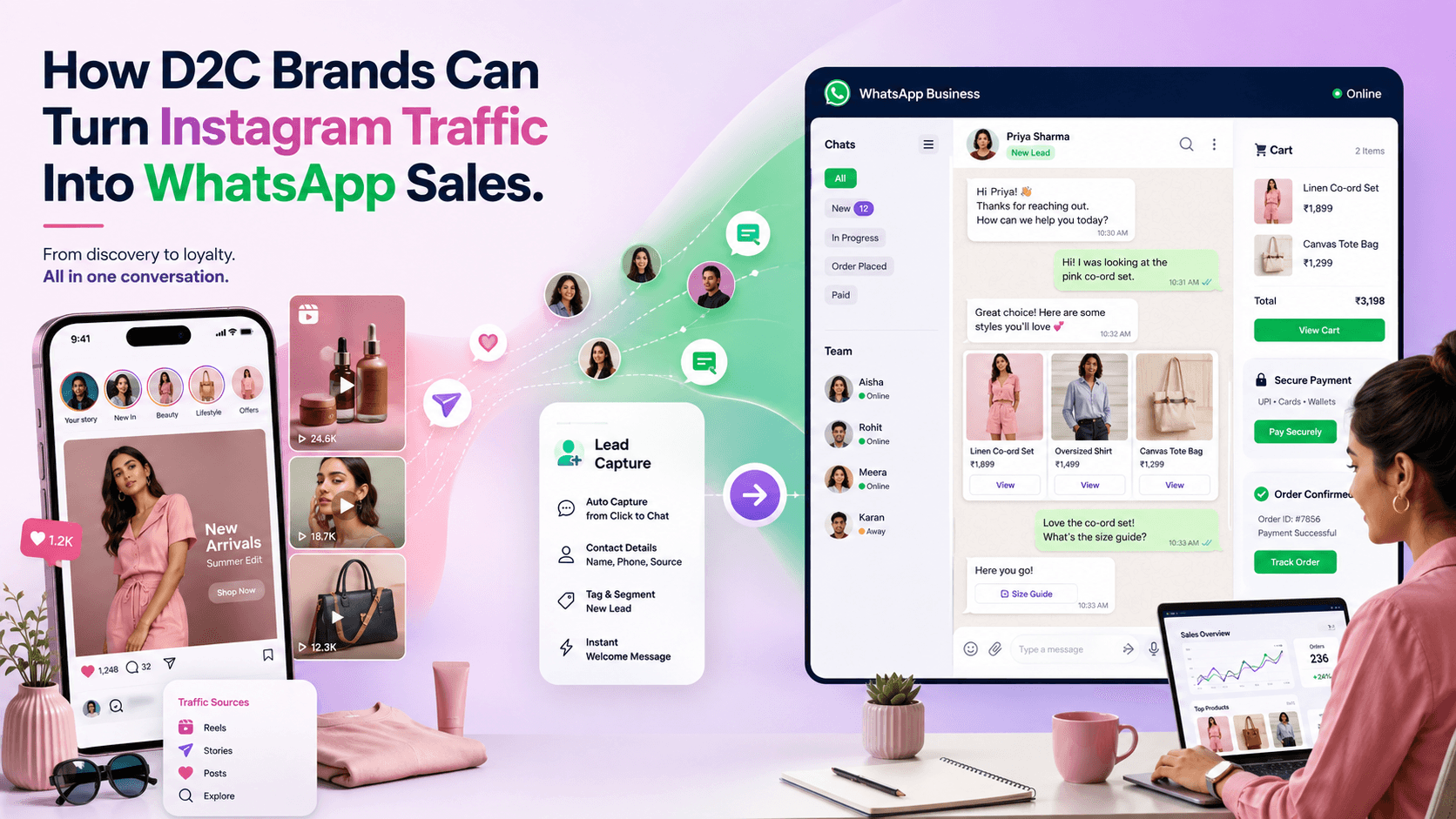
On this page13 sections
- Why Instagram Traffic Does Not Always Convert
- Create a Direct Instagram-to-WhatsApp Path
- Respond Immediately
- Capture and Organise Every Lead
- Recommend the Right Products
- Make Shopping Possible Inside WhatsApp
- Follow Up Based on Customer Intent
- Retarget Customers With Relevant Campaigns
- Track Which Instagram Campaigns Generate Sales
- Keep Human Support Available
- Respect Consent and Customer Preferences
- How Voixt.ai Helps D2C Brands
- Final Thoughts
Instagram helps D2C brands attract attention through Reels, Stories, influencer content and advertisements. However, likes and profile visits do not automatically become sales.
Customers often need answers about products, sizes, pricing, delivery, ingredients or return policies before purchasing. Moving interested shoppers from Instagram to WhatsApp creates a direct path from discovery to conversation and purchase.
Why Instagram Traffic Does Not Always Convert
Instagram is effective for product discovery, but customers can easily become distracted. They may view a product, open the comments, visit another profile and forget to return.
Common conversion problems include:
- Unclear purchasing steps
- Slow responses to direct messages
- Product links that require too many clicks
- Unanswered questions
- Limited follow-up
- Complicated checkout processes
- Customers losing the product they viewed
A WhatsApp conversation gives the brand an opportunity to understand the customer’s interest and guide them towards the right purchase.
Create a Direct Instagram-to-WhatsApp Path
D2C brands can place WhatsApp links in:
- Instagram bios
- Story link stickers
- Product posts
- Reel captions
- Influencer campaigns
- Click-to-WhatsApp advertisements
- Highlights
- Promotional landing pages
Use pre-filled messages to capture the source and product context.
For example:
“Hi, I saw your skincare combo on Instagram and would like more details.”
This helps the sales team understand what attracted the customer before replying.
Respond Immediately
Customers who click from Instagram are usually interested at that moment. A delayed response can cause the brand to lose the opportunity.
An automatic acknowledgement can confirm that the message has been received and ask one relevant question:
“Hi! Thank you for contacting us. Which product would you like to know more about?”
Automation should begin the conversation, while a team member or AI-assisted response provides relevant guidance when needed.
Capture and Organise Every Lead
Every new WhatsApp enquiry should become an organised customer record. Capture details such as:
- Customer name
- Product interest
- Source campaign
- Budget range
- Size or variant
- Delivery location
- Purchase stage
- Assigned team member
- Follow-up date
This prevents enquiries from disappearing inside unstructured chats.
Recommend the Right Products
Avoid sending the entire catalogue when the customer is interested in one product category. Ask a few useful questions and share a focused selection.
For example, a clothing brand may ask about size, colour and occasion. A skincare brand may ask about the customer’s product preference without making unsupported medical claims.
Relevant recommendations reduce confusion and make the buying decision easier.
Make Shopping Possible Inside WhatsApp
Customers should be able to move from enquiry to order with minimal friction. A WhatsApp E-Shop can allow customers to:
- Browse products
- View images and prices
- Select variants
- Add products to their cart
- Confirm delivery details
- Choose a payment method
- Place an order
- Receive order updates
The fewer unnecessary steps involved, the lower the chance that an interested shopper abandons the purchase.
Follow Up Based on Customer Intent
Not every customer buys during the first conversation. Some may be comparing products, waiting for a salary date or discussing the purchase with someone else.
Useful follow-up triggers include:
- The customer requested time to decide
- A selected product is back in stock
- A payment link was shared but not completed
- The customer asked about a specific offer
- A cart remains incomplete
- A requested size or colour becomes available
- The customer wanted to be contacted later
Every follow-up should have a clear reason and should not feel like repeated pressure.
Retarget Customers With Relevant Campaigns
Customer tags and filters can help D2C brands create focused WhatsApp campaigns for:
- New Instagram leads
- Product-specific interests
- Abandoned enquiries
- Previous customers
- New arrivals
- Restocked products
- Festival collections
- Repeat-purchase reminders
- High-value customers
Customers who already purchased should be excluded from campaigns asking them to complete the same purchase.
Track Which Instagram Campaigns Generate Sales
Likes and views are useful engagement signals, but D2C brands also need to know which activities generate leads and revenue.
Track information such as:
- Instagram campaign source
- Number of WhatsApp enquiries
- First-response time
- Qualified leads
- Orders completed
- Revenue by campaign
- Common customer questions
- Reasons for lost sales
This helps brands identify the content, advertisements and influencers that produce meaningful business results.
Keep Human Support Available
Automation can handle acknowledgements, product information, lead assignment, reminders and order updates. Human support remains important for:
- Complex product recommendations
- Payment concerns
- Delivery problems
- Exchanges and returns
- Complaints
- High-value orders
- Custom requirements
A smooth AI-to-human handover ensures that customers do not have to repeat their entire conversation.
Respect Consent and Customer Preferences
A customer messaging from Instagram does not automatically mean they want every future promotion. D2C brands should collect appropriate consent, segment campaigns carefully and provide a clear opt-out option.
Relevant communication builds trust. Excessive or unrelated messaging can cause customers to block or report the business.
How Voixt.ai Helps D2C Brands
Voixt.ai helps D2C brands connect Instagram-generated interest with an organised WhatsApp sales process through:
- Automatic contact capture
- Shared multi-agent WhatsApp inboxes
- Conversation assignments
- Visual CRM pipelines
- Contact tags and filters
- Follow-up reminders
- No-code automation workflows
- AI-powered responses
- AI-to-human handovers
- Targeted campaign management
- E-Shop product browsing
- Orders and payments
- Automated order updates
- Private internal notes
Teams can track customers from their first Instagram enquiry through product selection, follow-up, payment and repeat purchase.
Final Thoughts
Instagram can create attention, but D2C brands need a clear process to convert that attention into sales.
By connecting Instagram with WhatsApp, responding quickly, capturing every lead, providing relevant recommendations and simplifying checkout, brands can reduce lost opportunities and create a more personal buying experience.
Voixt.ai brings conversations, CRM, automation, campaigns, products, orders and payments together so D2C teams can turn more Instagram interest into measurable WhatsApp sales.